ServicesStorm Damage Repair
Storm Damage Repair in Piedmont
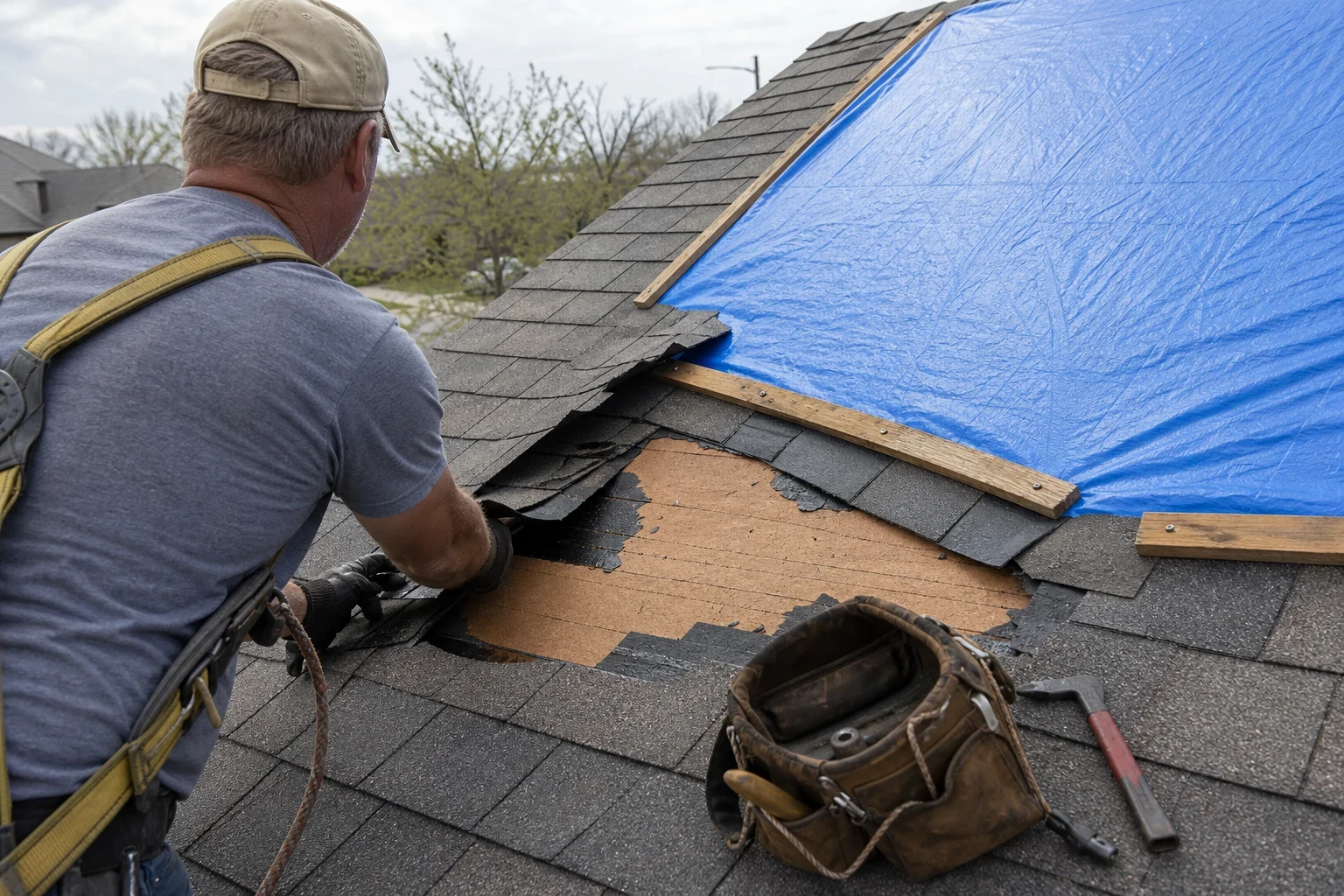
When hail or a hard wind comes through, we check each slope of your roof by hand and photograph the bruised shingles, creased tabs and dented vents we find. You get a plain answer on what needs fixing, and your flower beds and driveway stay covered while we work.
What storm damage repair covers
From the street, a hail-hit roof can look fine. The impact cracks the fiberglass mat inside an asphalt shingle and strips away the mineral granules that protect it from sunlight, so the shingle wears out years early without ever looking broken. Wind works differently. It tears the adhesive strip that bonds each course to the one below, and a tab that has lifted seldom bonds again. Either way, the leak tends to appear months later at nail holes and seams.
Our job is to locate that damage, record it so you can see it, and fix it with matching materials so water runs off the way the roof was built to shed it. If most of the roof took hits, we'll say so, recommend a roof replacement instead, and back that up with the photos.
Every repair is done under our Oklahoma residential roofing license. Between us we have over 20 years of combined roofing experience, much of it spent telling a fresh hail bruise apart from ordinary blistering and age.
What the repair includes
- Slope-by-slope documentation
- We photograph hail hits, lifted tabs, exposed nail heads and damaged metal on each slope, marked so you can tell which area each photo shows. You keep the full set.
- Shingle and underlayment replacement
- Damaged shingles come out, the underlayment beneath is checked for tears, and new shingles are hand-sealed where the factory strip won't bond in cool weather.
- Flashing, vents and pipe boots
- Hail dents box vents and splits the neoprene collars on plumbing boots. We replace those parts and reseal step and counter flashing that wind has pulled away from walls and chimneys.
- Decking checks at soft spots
- If a section flexes underfoot, we look at the plywood or OSB below. Wet or delaminated decking gets replaced before new shingles go over it.
- Protection and cleanup
- Tarps go over shrubs and flower beds, and we lay plywood where ladders and dumpsters meet your driveway. A magnetic sweep of the lawn picks up stray nails before we leave.
Signs a storm hit your roof harder than it looks
Grit piling at the downspouts
Check where the downspouts empty after a storm. A thick spread of dark, sandy grit there means hail knocked the protective surface off your shingles.
Dimpled metal around the house
Dents in gutters, downspouts, vent caps or the fins on your AC unit show the hail was big enough to bruise shingles as well.
Missing or folded shingles
Shingles lying in the yard need no explanation. A straight crease running across a tab is easier to miss; it shows the tab bent back in the wind and broke its seal.
New water marks indoors
A tea-colored blotch spreading across the drywall, or insulation that feels wet when you check the attic following a rain, tells you water has already gotten past the shingles. The entry point is often a vent collar or a flashing seam.
Reroofing on your street
Spring hail in central Oklahoma usually crosses a whole street at once. If neighbors are getting new roofs, yours sat under the same storm and should be checked.
What moves the cost of storm repair
The price depends on how many slopes the hail or wind actually touched, plus whatever turns up underneath once the broken shingles are lifted. You see a written scope before we start. If hidden damage changes it, we stop and show you before going on.
How far the damage spreads
Fixing a handful of lifted tabs on a single slope is modest work. When hail marked every slope, replacement often becomes the fairer comparison.
Shingle type and matching
Common three-tab shingles are easy to match. A discontinued architectural line is not, and that can widen the area that needs new material.
Decking condition
Water sitting under broken shingles softens plywood and OSB. Each sheet that has to come out adds material and labor.
Pitch and access
A steep roof calls for extra fall protection and a slower pace. A tight lot takes more setup to keep your landscaping covered.
Metal parts
Dented box vents, crushed ridge caps and bent flashing each go on the parts list.
How a storm repair job runs
- 1
Your phone call
Describe what you noticed and the date of the storm. We pick a time that suits your household and tell you what the inspection will cover.
- 2
Roof and attic inspection
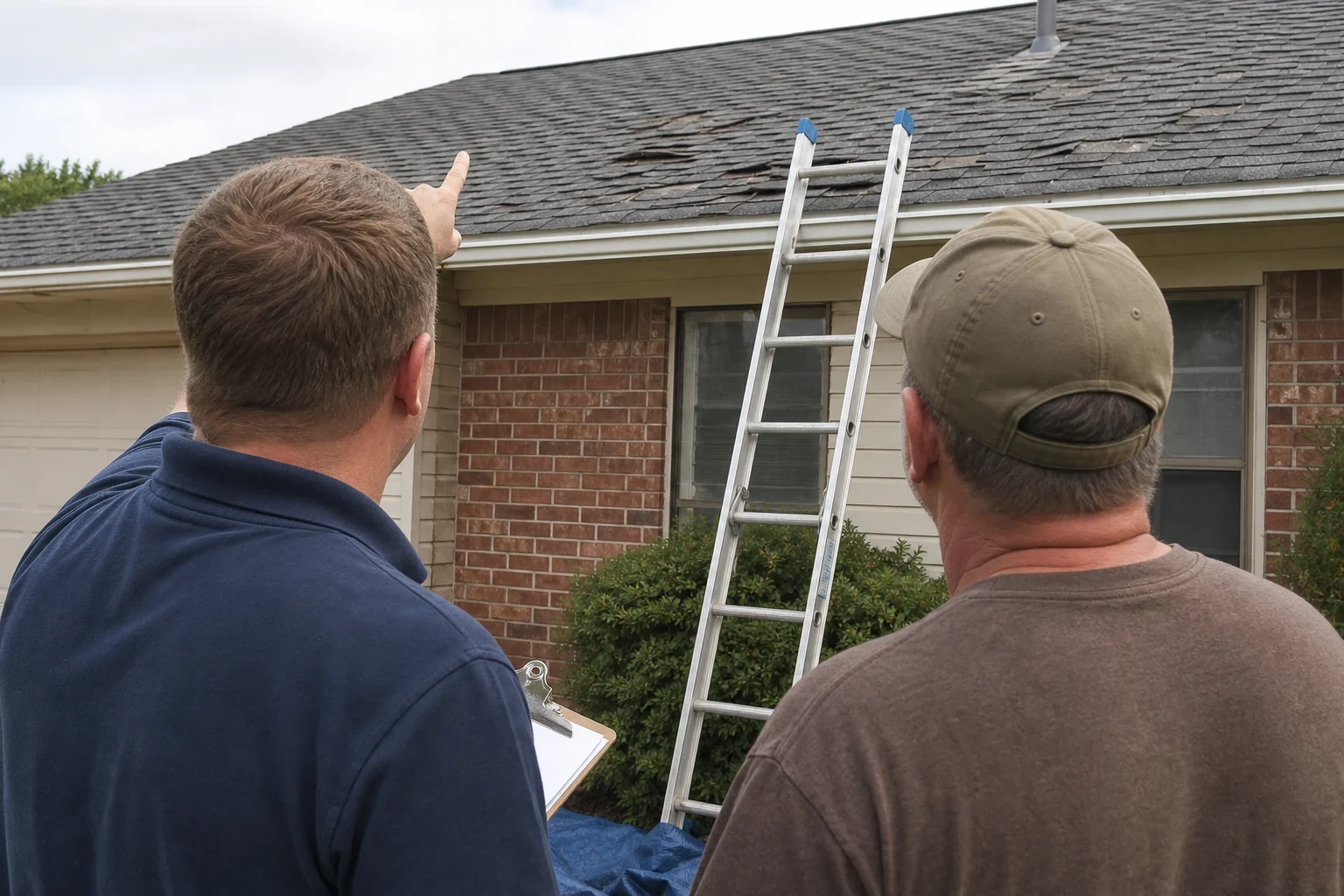
We go over every slope and look at the decking from the attic side. Then we sit down with you and review the photos before anything is agreed.
- 3
Written scope
A line-item list shows what we found and what we plan to replace. If you file a claim, those photos and notes are ready for your adjuster. The coverage decision belongs to the insurer; we explain the roofing side.
- 4
Repair day
Tarps and plywood go down before any tear-off. We remove the damaged material, install the new, and tell you right away if something under the shingles changes the plan.
- 5
Final walk and cleanup
We run a magnet across the lawn for nails, clear storm debris out of the gutters and walk the finished roof with you, photos in hand. The repair is backed by our lifetime workmanship warranty.
Storm damage repair questions
Will you deal with my insurance company?
We don't act as your adjuster or negotiate your coverage. We document the damage with dated photos and a written scope, and we can be on the roof when the adjuster inspects so the findings are explained in roofing terms. What the policy covers is between you and your insurer.
Can hail damage hide even if my roof looks fine?
Yes. A hail hit can crack the shingle mat without breaking the surface, and from the ground the roof looks normal. The damage shows up later as granule loss and leaks. That's why we inspect by hand on the roof, not from the yard.
Should I repair or replace after a storm?
It depends on how widespread the damage is and the roof's age. Scattered damage on a younger roof is usually a repair. Widespread bruising across all slopes or an older roof often makes roof replacement the better value, and we'll explain our reasoning with the photos.
Is the storm repair work warranted?
Yes. Our work carries a lifetime workmanship warranty, which covers how we installed the repair. Shingle material is covered separately by the manufacturer's terms.
What about dented gutters?
Hail often dents gutters and downspouts at the same time. We can note them during the inspection, and our gutters service handles repair or replacement if they no longer drain properly.
Get the storm damage on record
Call us after the weather clears. We'll set a time to inspect, photograph what we find and walk you through it before any repair begins. We serve Piedmont, Yukon, El Reno and nearby towns.