ServicesCommercial Roof Repair
Commercial Roof Repair in Piedmont
Our crew follows a leak back to the exact point where water enters your membrane or metal roof, then fixes that point instead of the spot nearest the stain. You receive a written repair scope before work begins, and we keep doors, parking and planting beds clear for the whole visit.
Fixing the roof over your business at its weak points
Leaks on commercial roofs rarely begin out in the open field. They begin at details: a TPO seam that has split, EPDM flashing that has shrunk and pulled off a parapet, a cracked pitch pan around a gas line, or a metal panel screw that has worked loose. Water can run several feet under the roof surface from any of these before a ceiling tile shows it, so we follow the path rather than caulk whatever sits closest to the stain.
If the membrane and insulation are still in good shape, a targeted repair usually costs you far less than a tear-off. When a roof is past the point where repairs will last, we say so directly and walk you through what commercial roof replacement would involve.
Our team has over 20 years of combined roofing experience on low-slope and metal systems. We plan each visit with you so employees, tenants and deliveries can get in and out normally while we work overhead.
What goes into a commercial repair
- Tracing the leak path
- We begin indoors where the water appears, then work the roof directly above and upslope of it. A core sample or moisture reading shows whether the insulation below the membrane is wet, and that decides what kind of repair makes sense.
- Membrane and seam work
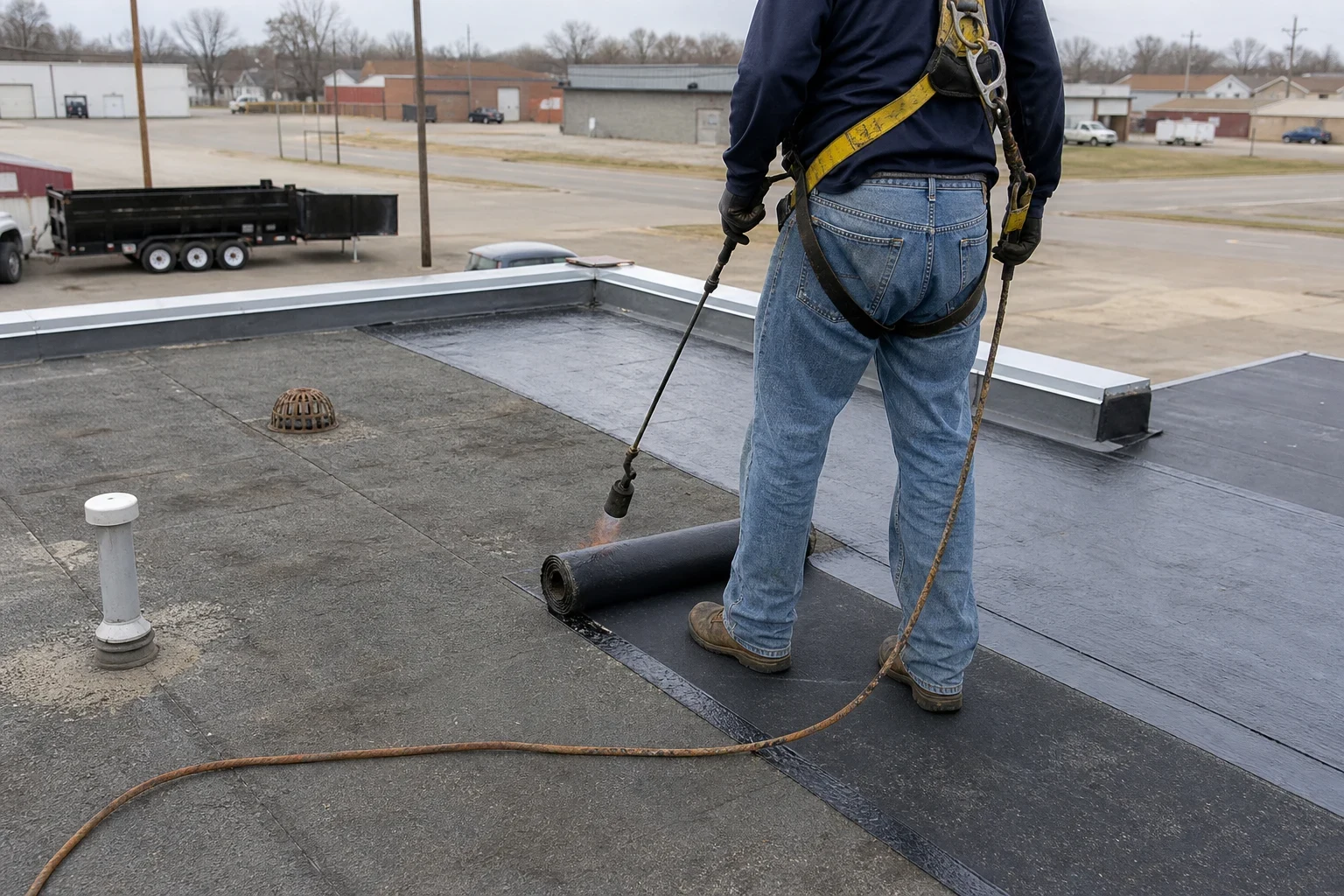
- Separated TPO seams are cleaned and hot-air welded back together. EPDM laps are primed and closed with seam tape, and modified bitumen is patched with matching material, since incompatible products are a frequent cause of patches peeling inside a year.
- Flashings and penetrations
- Parapet wall flashing, curbs under rooftop HVAC units, vent stacks and pitch pans get resealed or rebuilt. These joints expand and contract with every swing in temperature, so we use flashing materials rated to move with them.
- Metal panels and fasteners
- On metal roofs we replace worn screws and cracked neoprene washers, reseal panel laps and ridge caps, and change out panels that have rusted through.
- Drainage fixes
- Blocked roof drains, clogged scuppers and loose gutter connections leave water sitting on a low-slope roof, which wears it out early. We clear and repair them, and our gutters service covers downspouts down to grade.
- Documented findings
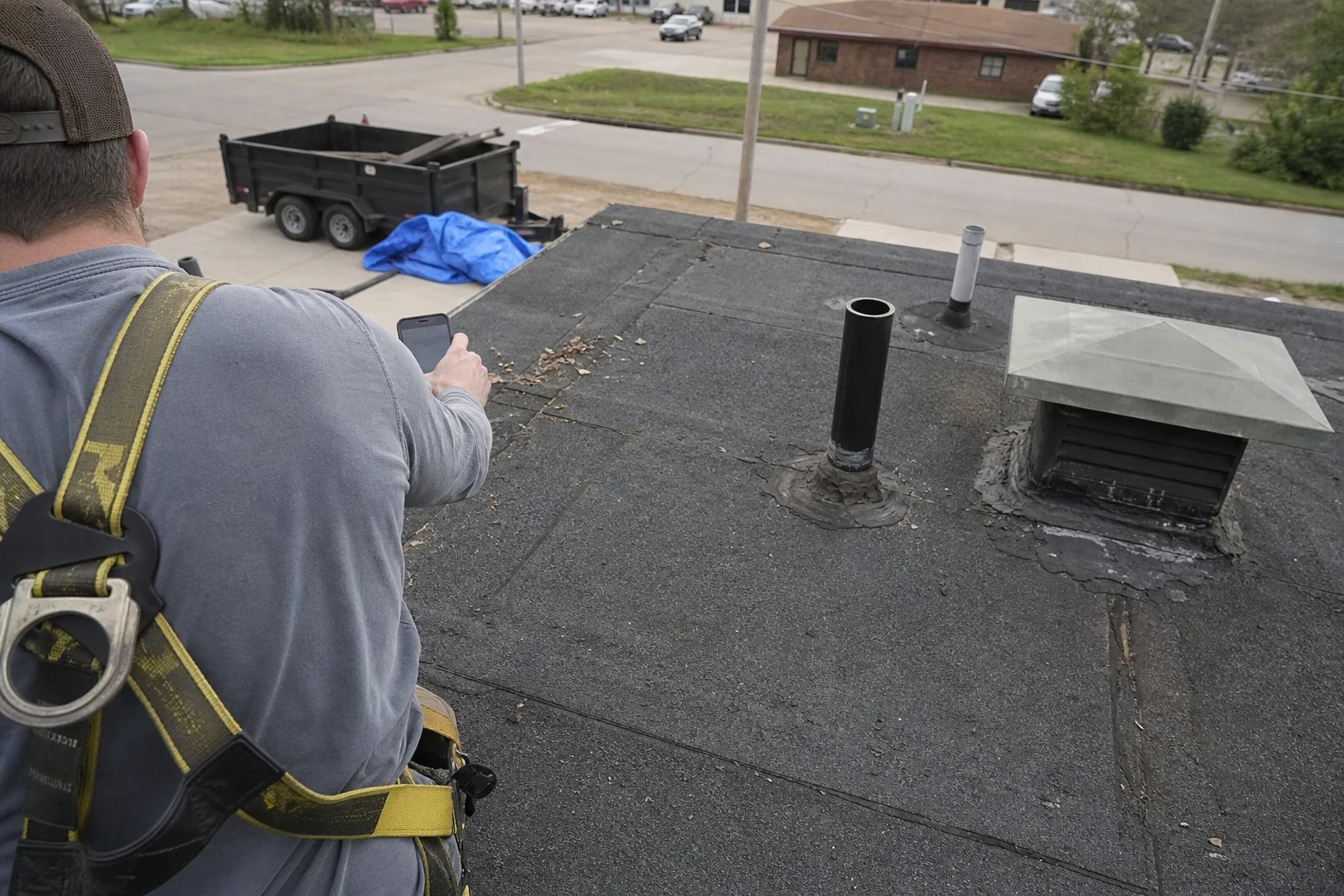
- Before any repair starts, you get photos from the roof and a written list of each repair with the reason for it. It is easy to forward to a building owner, landlord or insurance company.
Warning signs on a commercial roof
Stained or sagging ceiling panels
Tan or yellow rings spreading across suspended ceiling panels show a leak that has been active for a while, not one that just started. Water tends to travel along the deck first, so the opening is usually upslope of the mark.
Puddles that outlast the weather
Water still sitting on the roof two days after a storm puts strain on seams and adds load to the deck. A blocked drain or a sunken area in the insulation is the usual cause.
Bubbles, cracks or a tight membrane
Blisters in modified bitumen, cracking surface coatings, or EPDM drawing tight at the perimeter all mean the membrane is stressed and close to opening up.
Rust and loose metal
Screws backing out, rust trails under fasteners, and edge metal lifted by strong wind let water in on both metal and membrane roofs.
Dents or bruising after hail
Hail can damage a membrane or dent metal panels without an immediate leak. After a hailstorm, our Storm Damage Repair page covers how we record that damage.
What moves the price of a commercial repair
Every repair is priced from conditions we actually see on your roof, never from a flat rate per call. The written scope breaks the job into line items, so each charge has a reason next to it. Four things account for most of the difference between one job and the next.
Type of roof system
TPO, EPDM, modified bitumen and metal each call for their own materials and repair methods. Older or less common systems can take extra time to match with compatible products.
Moisture under the membrane
Insulation board that has soaked up water must be removed and new board installed in that area. A patch laid over wet board seals the moisture in, and the leak comes back.
Getting onto the roof
Building height, whether there is a working roof hatch, and the need for a lift or hoist all change setup time and labor.
How many details need work
One open seam is a small job. Rebuilding flashing around several rooftop units and along a stretch of parapet wall takes far more material and hours.
What happens on a repair visit
- 1
First phone conversation
Share whatever you know about the roof system, where water appears inside, and which hours are your busiest. We book the visit around that so your entrance stays open during business hours.
- 2
Roof inspection
We walk the full roof, check seams, flashings and drains, and look at the ceiling under each leak. You then get photos and a written scope naming every repair and why it matters.
- 3
Setting up the site
Before we hoist anything, we mark a work zone, lay covers over landscape beds near the lift point, and keep walkways and doors open. If you like, we also cover interior spaces below active leaks.
- 4
Repairs and cleanup
We complete the repairs and water-test them where the layout allows. Then we clear scraps, fasteners and debris from the roof and the ground, and run a magnetic sweeper across the lot.
- 5
Final review
We go over the completed work with you, on the roof or through photos, and point out anything to keep an eye on at your next inspection.
Questions about commercial roof repair
Should my roof be repaired or replaced?
A roof with a few isolated leaks and dry insulation is usually a good repair candidate. When core samples show wet insulation across large areas, or the membrane has turned brittle throughout the field, patches stop holding. We show you the photos and readings and leave the decision with you.
Will the work interrupt my business?
Nearly all repair work happens up on the roof, so operations below can carry on. We stage the hoist and material drop away from your main door, at hours you pick, and mark off the work zone so staff and customers know where not to walk.
Do your repairs carry a warranty?
Yes. Our repair work is backed by a lifetime workmanship warranty. Any defect in the materials themselves is handled under the manufacturer's terms for that product.
Can you repair metal buildings?
Yes. We work on metal roofs over shops, warehouses and outbuildings, replacing fasteners, swapping damaged panels, resealing laps and redoing ridge caps.
Do you take jobs outside Piedmont?
Yes. We regularly repair roofs on buildings in Yukon, El Reno, Bethany and Warr Acres. Every town we cover is listed on our Service Areas page, and a quick phone call will confirm your address.
Find the source and stop the leak
Let us know where the water is showing up, inside or on the roof surface, and we will schedule an inspection and go over every finding with you in plain terms.