ServicesRoof Inspections
Roof Inspections in Piedmont
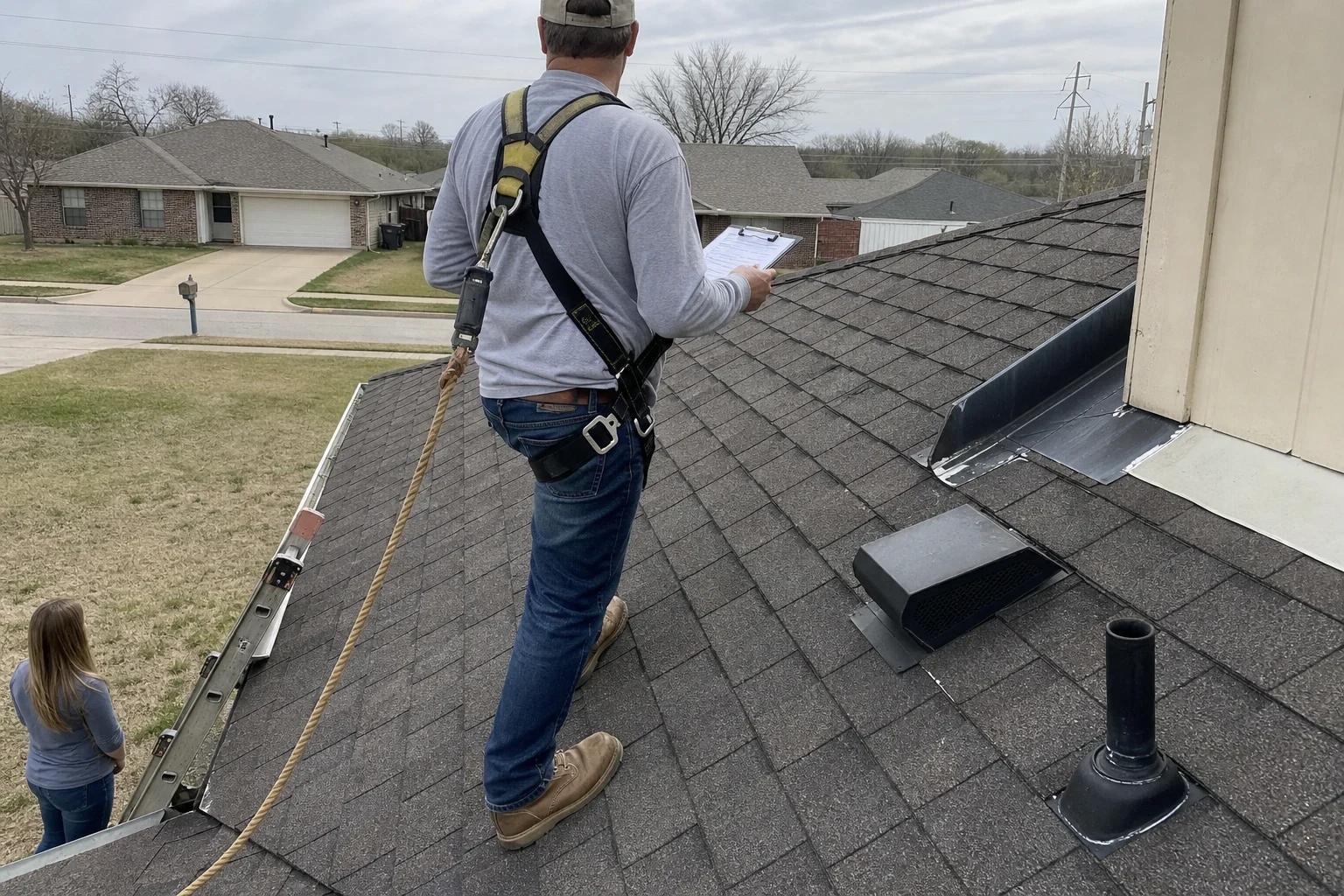
We inspect your roof surface, flashing, vents and attic, photograph what we find and explain it in plain terms. You get an honest read on whether your roof needs a repair, needs watching or is fine as it is, with your yard and floors left as we found them.
What a Roof Inspection Tells You
Leaks rarely begin with anything you can see from the ground. They start with a shingle tab that has lifted, a rubber boot around a plumbing vent that has split, or a nail slowly working its way up out of the deck. Once a ceiling stain appears, water has often been soaking the decking or insulation for some time. Catching those early failures keeps the fix small.
Schedule an inspection before buying or selling a house, after hail or high wind, once an asphalt shingle roof is past about 15 years, or any time something looks wrong from the driveway. We bring over 20 years of combined roofing experience to reading the wear on a roof, and we work under an Oklahoma residential roofing license.
Your property gets the same care as the roof. Ladders sit on stabilizer pads set back from flower beds, we stay out of the landscaping, and when the attic is part of the visit we put drop cloths down from your door to the hatch.
What We Check on Every Inspection
- 01
Shingle surface and granule loss
We look for bare patches, bruised spots, cracked or curled tabs and seal strips that have let go. Lots of granules collecting in the gutters tells us the asphalt is losing its UV shield and aging faster.
- 02
Flashing and penetrations
Leaks most often start at step flashing along walls, counterflashing at the chimney, valley metal and pipe boots. We inspect each for gaps, rust, dried-out sealant and edges that have lifted.
- 03
Decking and structure
Our feet tell us plenty as we cross each slope. A soft or springy area usually means rotted sheathing, and a dip in the ridge line can point to trouble in the rafters or deck.
- 04
Attic ventilation and moisture
Inside the attic we check for light coming through nail holes, water marks on the underside of the deck, wet insulation and soffit vents packed with insulation or debris. Trapped attic heat bakes the shingles from underneath and takes years off the roof.
- 05
Gutters and drainage
We make note of loose hangers, runs that sag and downspouts that empty right beside the foundation. Any fixes there fall under our gutters service.
Questions about Roof Inspections?
Call(405) 870-2474When It Makes Sense to Book an Inspection
Hail or high wind came through
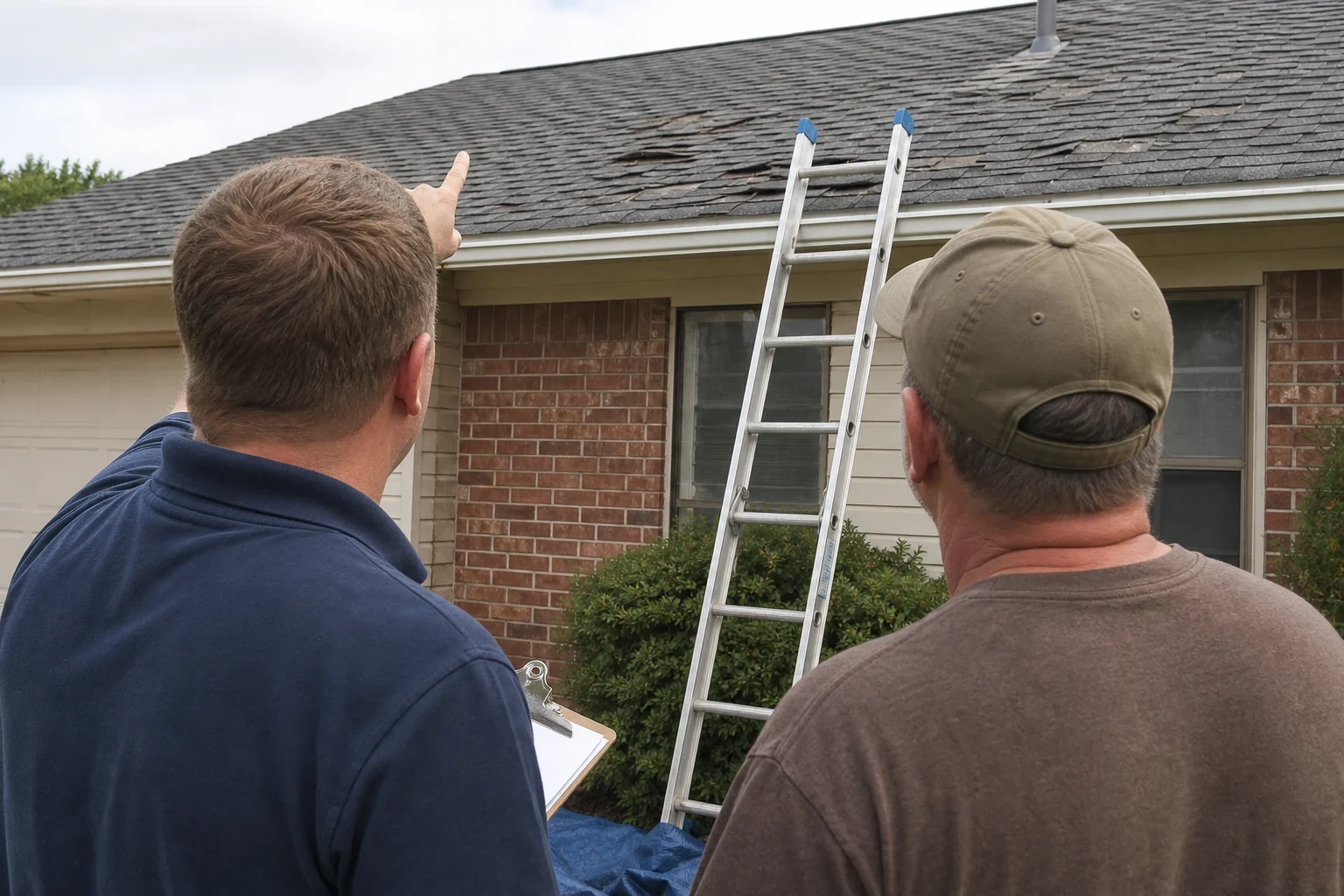
Spring hail and straight-line winds in central Oklahoma can bruise asphalt shingles without leaving anything visible from the lawn. Up close, we can tell whether the damage is real and worth documenting.
Grit piling up at the downspouts
A new roof sheds a little loose grit at first, and that is normal. When an older roof keeps leaving granules behind, the shingles are losing the coating that shields the asphalt from the sun.
Brown rings on a ceiling or near a light fixture
Stained drywall or bubbling paint means water has already found a way in. We trace it back to the entry point, which is often several feet uphill on the roof from the spot you see.
Shingles that curl, cup or go missing
Lifted edges give the wind something to grab, and tabs tear off. Lose only a few and the underlayment sits exposed to sun and rain.
A home sale is coming up
Documenting the roof's condition gives buyer and seller the same facts before closing, so nobody is caught off guard at the final walkthrough.
How Inspection Day Goes
- 1
We set the time by phone
On the call we ask how old the roof is, whether you have had leaks or storm damage, and if the attic needs checking. Those answers tell us which ladders to load and which rooms need protection.
- 2
Ground and exterior walk
First we circle the house and look over the roof line, fascia, gutters and downspouts. Ladders go down on pads, clear of shrubs and beds.
- 3
On the roof
Each slope gets walked and photographed, with any doubtful decking tested underfoot. We look closely at every vent, valley and piece of flashing.
- 4
Attic check, if needed
We lay drop cloths along the route to the hatch and put on shoe covers before stepping inside. After checking the deck underside, insulation and airflow, we tidy the area around the hatch.
- 5
We walk you through it
Before leaving, we sit with you and go through the photos one by one. You learn what needs repair now, what can be watched and what is sound, and you are under no pressure to decide that day.
What Affects the Cost of an Inspection
The price of an inspection tracks the time it takes us to cover your roof and attic safely. A larger, steeper or harder-to-reach roof simply takes more of that time. We go over the cost on the phone, before anyone sets up a ladder, and any repair work the inspection turns up gets its own written estimate.
- Roof size and pitch
- Every added square and every bit of extra slope slows the walk across the roof. On very steep pitches we may set roof jacks or harness anchors before we can work.
- Stories and site access
- A second story or a narrow side yard adds setup time, more so because we place ladders where they will not crush beds or shrubs.
- Getting into the attic
- A fold-down garage ladder takes minutes. A small hatch inside a closet, or a finished attic with tight crawl space, takes noticeably longer.
- What the report is for
- A basic condition check is lighter work than a full photo record for a home sale or a storm claim, which calls for more documentation.
Questions About Roof Inspections
How much time should I set aside for the inspection?
Most one-story homes take us about an hour, and that includes the attic. A larger footprint or a steeper pitch stretches the visit out. We tell you how long to expect when we book the time by phone.
Does someone need to be at the house?
Not while we are up on the roof. If the attic is part of the visit, someone has to let us in, and we would rather review the photos with you in person before we head out.
Are you going to push me toward a new roof?
No. A lot of roofs only need a handful of shingles replaced or a new pipe boot, and we will say so plainly. If replacement really is the better choice, we show you the photos behind that call, and our roof replacement page lays out what the job involves.
Will the inspection help with a hail claim?
It can. We document hail and wind damage with dated photos and measurements you can pass along to your insurance company. We are glad to explain how claims typically move along, but the adjuster decides what is covered. Our storm damage repair page explains the next steps.
Can you handle the repairs you find?
We can. Smaller problems like a lifted piece of flashing or a cracked pipe boot are handled through our roof repair service. Our repair and replacement work is backed by a lifetime workmanship warranty.
Find Out Where Your Roof Stands
Tell us about your roof's age and anything you have noticed. We will set a time, protect your yard and floors during the visit, and show you exactly what we found.